
WHAT PAGLIAESQUE MEANS IN MODERN CULTURE
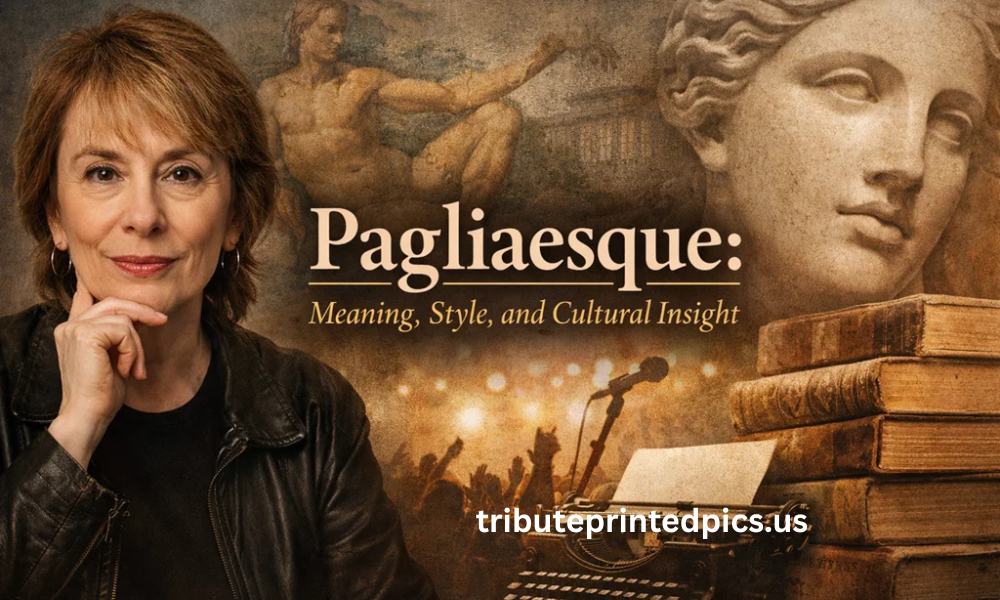
The term pagliaesque describes a cultural style of thinking linked with Camille Paglia, a well-known cultural critic who shaped debates around art, gender, and society. It is not just a label for one thinker but a wider way of reading culture through bold interpretation and direct analysis. This approach connects art, history, philosophy, and media into one continuous field of meaning.
Pagliaesque thinking does not stay inside traditional academic boundaries. It moves across cultural commentary, online discourse, and media criticism. It treats society as a living system shaped by history, symbols, and human instincts. Instead of separating ideas into fixed academic categories, it builds meaning through connection and contrast.
This style of interpretation often relies on analytical viewpoint and interpretive analysis. It focuses on how art and culture reflect deeper structures of human behavior. In this sense, pagliaesque thinking becomes a cultural lens that reads society through patterns rather than isolated facts.
The approach also reflects intellectual independence. It does not depend on agreement with dominant academic trends. Instead, it builds meaning through personal interpretation supported by historical grounding and philosophical analysis. This makes it different from many modern forms of commentary that depend heavily on consensus.
Quick Bio Table — Pagliaesque :
| Category | Details |
|---|---|
| Concept Name | pagliaesque |
| Core Idea | A cultural and intellectual approach that combines art, philosophy, history, and media to interpret society through layered analysis |
| Origin | Inspired by Camille Paglia’s cultural criticism and intellectual style |
| Key Figure | Camille Paglia (cultural critic, art and gender theorist) |
| Intellectual Domain | cultural criticism, art criticism, literary criticism, philosophical analysis |
| Main Focus | art and culture, Western civilization, Renaissance art, ancient mythology, societal analysis |
| Method Style | interdisciplinary analysis, interpretive analysis, analytical viewpoint, cultural lens |
| Writing Style | provocative writing style, fearless critique, bold cultural voice, narrative-driven critique |
| Theoretical Base | cultural theory, aesthetic theory, historical grounding, myth and symbolism analysis |
| Key Themes | gender discourse, feminism critique, sexuality and culture, nature vs culture |
| Modern Extension | digital cultural identity, digital storytelling, online discourse, media criticism |
| Digital Context | creator economy, platform ecosystems, algorithm influence, attention economy dynamics |
| Communication Space | social media discourse, micro-community discourse, academic-to-digital transition |
| Identity Aspect | digital persona, identity construction online, intellectual branding, identity-driven branding |
| Content Style | long-form content, interpretive storytelling, opinion-led content, engagement-driven narratives |
| Thought Approach | critical thinking, intellectual independence, cross-disciplinary thinking, cultural pattern recognition |
| Authority Building | creative authority, thought leadership, authority-building content |
| Cultural Impact | cultural evolution frameworks, ideological critique, culture wars discourse, elite vs mass culture analysis |
| Modern Use | content strategy, digital intellectual identity, semantic content clustering, platform-native identity |
CAMILLE PAGLIA AND HER INTELLECTUAL INFLUENCE
Camille Paglia plays a central role in shaping what pagliaesque thinking represents. Her work combines cultural criticism, art criticism, and literary criticism into a single intellectual voice. She is widely known for her strong positions on Western civilization, Renaissance art, and ancient mythology.
Her writing style is often described as fearless critique because it challenges established academic discourse. She does not avoid controversial topics, especially in gender discourse and feminism critique. Instead, she approaches them through historical comparison and cultural theory.
Paglia’s intellectual positioning is rooted in the idea that culture is shaped by both nature and structure. This creates a framework where sexuality and culture are studied together rather than separately. Her work often shows how human behavior is influenced by deep biological and symbolic forces.
This approach gives her a strong public intellectual voice. She moves beyond academic circles into broader media discussions. Her influence extends into digital cultural identity, where her ideas continue to shape debates in modern online spaces.
STRUCTURE OF PAGLIAESQUE ANALYSIS AND THINKING
Pagliaesque thinking follows an interdisciplinary analysis model. It does not limit itself to one subject area. Instead, it connects art history analysis, philosophical analysis, and societal analysis into a single interpretive system.
This structure allows thinkers to move between Renaissance art, modern media criticism, and cultural theory without losing coherence. It creates a broad intellectual framework where each topic reflects another.
At its core, pagliaesque thinking uses classical influence as a foundation. Ancient mythology, Western civilization, and historical art forms become reference points for understanding modern behavior. These references are not decorative but structural, shaping how meaning is built.
The method also uses provocative writing style as a tool. This style forces readers to engage with ideas rather than passively accept them. It encourages critical thinking and challenges emotional or ideological assumptions.
PAGLIAESQUE VIEW OF ART AND CULTURE
In art criticism, pagliaesque interpretation focuses on how art expresses human instincts. It studies how visual symbols reflect deeper psychological and cultural forces. This includes myth and symbolism analysis, where recurring images are traced across time.
Renaissance art often plays an important role in this analysis. It is seen as a bridge between ancient mythology and modern expression. Through this lens, art becomes a record of human consciousness rather than just aesthetic production.
This approach also explores nature vs culture as a central tension. Nature represents instinct, emotion, and biological reality. Culture represents structure, order, and symbolic systems. Art exists between these two forces and expresses their interaction.
Aesthetic theory in this context is not abstract. It becomes a tool for understanding how societies shape meaning through visual form, narrative, and representation. This creates a deeper interpretive storytelling style where meaning is layered and connected.
DIGITAL CULTURAL IDENTITY AND ONLINE EXPRESSION
In the digital world, pagliaesque thinking has evolved into new forms of expression. Digital storytelling now plays a major role in shaping cultural identity. People express ideas through platforms that combine text, image, and video into hybrid narratives.
This environment creates digital persona structures where identity is continuously shaped by interaction. Online discourse becomes a space where cultural commentary happens in real time. Ideas spread through engagement rather than formal publication.
The creator economy strengthens this shift. Individuals build identity-driven branding through content strategy and audience engagement. Their intellectual positioning depends on how clearly they express ideas within platform ecosystems influenced by algorithm systems.
Algorithm influence affects what content becomes visible. This creates algorithm-driven visibility where strong narratives and emotional clarity often perform better. As a result, creators adapt their communication style to match platform behavior.
COMPARISON OF CLASSICAL AND DIGITAL CULTURAL ANALYSIS
The difference between traditional and digital cultural criticism can be understood through structural comparison. Classical analysis focuses on academic discourse, while digital analysis focuses on engagement and visibility.
| Aspect | Classical Approach | Digital Approach |
|---|---|---|
| Communication | Academic writing | Online discourse |
| Audience | Scholars | Public communities |
| Speed | Slow development | Real-time interaction |
| Style | Formal interpretation | Opinion-led content |
| Reach | Limited circulation | Platform ecosystems |
This comparison shows how cultural theory has moved from institutions into digital environments. It also shows how intellectual branding now depends on visibility as much as depth.
GENDER, IDENTITY, AND CULTURAL DEBATE
Gender discourse is one of the most debated areas in pagliaesque thinking. It connects sexuality and culture with historical and symbolic interpretation. Instead of treating gender as purely social construction, it includes biological, mythological, and cultural layers.
Feminism critique within this framework is not rejection but reinterpretation. It examines how cultural narratives shape identity-driven branding and personal expression. This leads to a broader societal analysis that includes both historical patterns and modern identity construction online.
Modern cultural identity is shaped by both tradition and digital influence. Online platforms allow identity to be performed publicly, creating new forms of engagement-driven narratives.
This environment often produces culture wars discourse, where ideological positions are debated intensely. Pagliaesque thinking approaches this through analytical depth rather than simplified judgment.
MEDIA, PLATFORMS, AND INFORMATION FLOW
Media criticism in the digital era focuses on how platforms shape thought. Platform-native identity becomes important because each platform encourages a different style of communication.
Social media discourse analysis shows how ideas spread through micro-community discourse. These small communities shape larger cultural conversations through repetition and engagement.
Attention economy dynamics also influence content creation. Content must compete for attention, which changes how ideas are presented. This leads to structured argumentation style being adapted into shorter, more impactful forms.
Performance of ideas online becomes a measurable outcome. Authority-building content depends on consistency, clarity, and engagement signals.
INTELLECTUAL INDEPENDENCE AND MODERN THINKING
Intellectual independence is a core principle in pagliaesque thought. It encourages thinkers to avoid conformity and develop personal interpretation. This creates space for fearless intellectual critique that challenges dominant narratives.
In digital environments, this becomes part of identity construction online. Creators build intellectual identity through consistent expression of ideas.
Creative authority is developed through long-form content and structured analysis. Thought leadership emerges when ideas show depth, consistency, and historical awareness.
This process supports intellectual branding, where identity is built through ideas rather than appearance. It also strengthens analytical viewpoint in cultural discussions.
TABLE: CORE ELEMENTS OF PAGLIAESQUE FRAMEWORK
| Element | Description |
|---|---|
| Cultural lens | Blends history, art, and society |
| Analytical depth | Multi-layer interpretation |
| Narrative style | Structured storytelling |
| Identity focus | Links culture and self |
| Authority building | Based on intellectual consistency |
PAGLIAESQUE THINKING IN DIGITAL STORYTELLING
Digital storytelling has become a major space for cultural expression. It allows creators to combine interpretive analysis with personal voice.
Long-form content plays a key role in building depth. It allows ideas to develop gradually rather than remain surface-level. This supports semantic content clustering where related ideas connect across topics.
Cross-disciplinary thinking becomes important here. Ideas from philosophy, media criticism, and art history analysis combine into unified narratives.
Engagement-driven narratives help maintain audience attention while still allowing analytical depth in writing. This balance is central to modern content strategy.
CULTURAL CRITICISM AND ONLINE ENVIRONMENTS
Online environments have changed how cultural criticism operates. Instead of academic journals, discussions happen in real time across digital platforms.
This creates narrative-driven critique where ideas are shaped through interaction. Content authenticity signals become important because audiences evaluate credibility based on consistency and tone.
Cultural pattern recognition helps identify repeated themes in online discussions. This includes ideological critique, historical-cultural comparison, and aesthetic interpretation.
The result is a dynamic system where cultural evolution frameworks develop continuously through participation.
MODERN INTELLECTUAL POSITIONING AND AUTHORITY
Modern intellectual positioning depends on visibility and clarity of thought. Digital intellectual identity is built through consistent expression of ideas.
Authority is no longer limited to institutions. It is created through content creator mindset and engagement patterns.
Creative differentiation strategy helps individuals stand out in crowded digital environments. It relies on interpretive cultural framework and strong narrative identity.
Philosophical cultural framing adds depth to digital expression, making ideas more structured and meaningful.
CONCLUSION
Pagliaesque thinking represents a cultural method that connects history, art, philosophy, and digital communication. It does not separate traditional academic discourse from modern online expression but merges them into one continuous field.
This approach helps explain how cultural commentary evolves in digital environments shaped by algorithm systems and attention economy dynamics. It also highlights the importance of intellectual independence in a world where ideas spread quickly and often lose depth.
By combining analytical viewpoint, interpretive storytelling, and cultural theory, pagliaesque thinking continues to influence how society understands identity, media, and culture in both classical and digital forms.
FAQs
1. What is pagliaesque thinking?
It is a cultural approach inspired by Camille Paglia that combines art, history, philosophy, and social analysis into one interpretive system.
2. Who developed the pagliaesque idea?
It is based on the work of Camille Paglia, a cultural critic known for her studies of art, gender, and Western civilization.
3. How is pagliaesque used in digital culture?
It is used in online discourse, digital storytelling, and content creation that focuses on cultural interpretation.
4. Is pagliaesque academic or modern?
It originates from academic discourse but now plays a strong role in digital cultural identity and media criticism.
5. Why is pagliaesque important today?
It helps explain how culture, identity, and media interact in modern digital environments shaped by platforms and algorithms.