
In today’s creation panorama, achievement is driven by means of more than simply technical know-how—it relies upon on how properly every moving part of a undertaking is aligned. As tasks emerge as more complicated and cut-off dates tighten, the need for a structured coordination framework has emerged as essential. Without a clean device in the area, even properly planned projects can face delays, price range issues, and verbal exchange breakdowns.
A clever coordination framework acts as a valuable fearful gadget of a creation mission. It connects teams, strategies, and facts right into a unified workflow that guarantees consistency and efficiency. From the early planning section to the very last execution, coordination determines how smoothly an undertaking progresses and how effectively demanding situations are controlled. By adopting present-day techniques and tools, production experts can transform their workflows and deliver successful builds with self-assurance.
Establishing a Strong Foundation with Strategic Planning
Every successful creation mission starts with a clean and strategic plan. This segment units the course for the entire mission, making sure that all stakeholders understand the dreams, timelines, and expectations. Without proper planning, initiatives are much more likely to come upon sudden troubles that can disrupt progress.
One of the most vital elements of this stage is correct cloth estimation. Using methods like lumber takeoff allows groups to decide specific cloth requirements, assisting to avoid shortages and decrease waste. This method not only improves performance, but additionally supports better budgeting and aid allocation.
Strategic planning additionally includes figuring out capability risks and making ready solutions in advance. By addressing demanding situations early, groups can maintain control over the assignment and ensure a smoother execution technique.
Streamlining Communication for Better Team Alignment
Effective communication is at the heart of any smart coordination framework. In construction projects, a couple of groups ought to work together seamlessly, and any hole in communication can cause big price mistakes.
Modern communication tools and platforms have made it less complicated to share facts in real time. These gears permit teams to collaborate, share progress, and solve problems quickly. By ensuring that everyone has get right of entry to to the same records, project managers can reduce misunderstandings and improve standard efficiency.
Regular meetings and updates also play a critical role in preserving alignment. When teams are live and knowledgeable, they can work more effectively towards common goals, making sure that the undertaking stays heading in the right direction.
Read More: Dimensional 2×6 Lumber Sizes Applied in Building and Remodeling of Home
Improving Budget Accuracy Through Advanced Cost Planning
Financial management is a key aspect of successful construction initiatives. Without accurate fee-making plans, even the most properly-coordinated tasks can face price overruns and economic challenges.
Professional Construction Estimating services provide certain value evaluation, allowing project managers to make informed choices. These offerings bear in mind various factors, which include materials, hard work, and ability risks, to supply accurate estimates.
By leveraging advanced fee-making plan techniques, groups can allocate resources effectively and maintain financial management throughout the project. This not only guarantees balance but also builds consideration with customers and stakeholders.
Leveraging Digital Tools for Real-Time Coordination
Technology has come to be an important part of modern-day construction coordination. Digital tools such as Building Information Modeling (BIM), cloud-based systems, and mobile applications permit groups to control projects more effectively.
These tools provide real-time insights into undertaking development, permitting stakeholders to display performance and make well-timed choices. With access to accurate information, groups can pick out issues early and take corrective measures before they worsen
Automation is another critical element of digital coordination. By automating repetitive duties, teams can focus more on strategic tasks improving productivity and performance. This integration of era guarantees that projects are finished with precision and consistency.
Enhancing Collaboration Across All Project Phases
Collaboration is a key motive force of fulfillment in production initiatives. A smart coordination framework encourages teamwork and ensures that all stakeholders are aligned in the course of the mission lifecycle.
From architects and engineers to contractors and providers, each crew member performs an important function in attaining mission goals. By fostering a collaborative environment, undertaking managers can make sure that everyone’s views are taken into consideration and that choices are made together.
Working with a skilled Construction Estimating company can further beautify collaboration by way of presenting professional insights and reliable records. This assist allows teams to navigate complicated challenges and maintain alignment, leading to higher effects.
Managing Risks with Proactive Coordination Techniques
Risk control is an important part of production coordination. Every mission involves uncertainties, and the capability to manipulate those risks correctly can make a substantial difference in assignment consequences.
Proactive coordination strategies involve identifying capacity dangers early and developing strategies to mitigate them. This includes everyday risk tests, clear verbal exchange, and contingency planning.
By staying ahead of potential problems, teams can limit disruptions and make certain that the assignment progresses smoothly. This proactive approach is not only most effective in reducing delays, but also improves ordinary performance and reliability.
Driving Continuous Improvement and Innovation
A smart coordination framework isn’t always static it evolves with every project. Continuous improvement is essential for preserving performance and staying aggressive in the production industry.
By analyzing beyond initiatives and accumulating remarks from stakeholders, groups can pick out areas for development and enforce higher practices. This process helps refine workflows, beautify coordination, and enhance general performance.
Innovation additionally performs a vital role in continuous development. By adopting new technology and methodologies, production specialists can live in advance of industry developments and deliver excellent initiatives constantly.
Read More: 10-facts-about-purple-heart-wood-characteristics
Final Thoughts
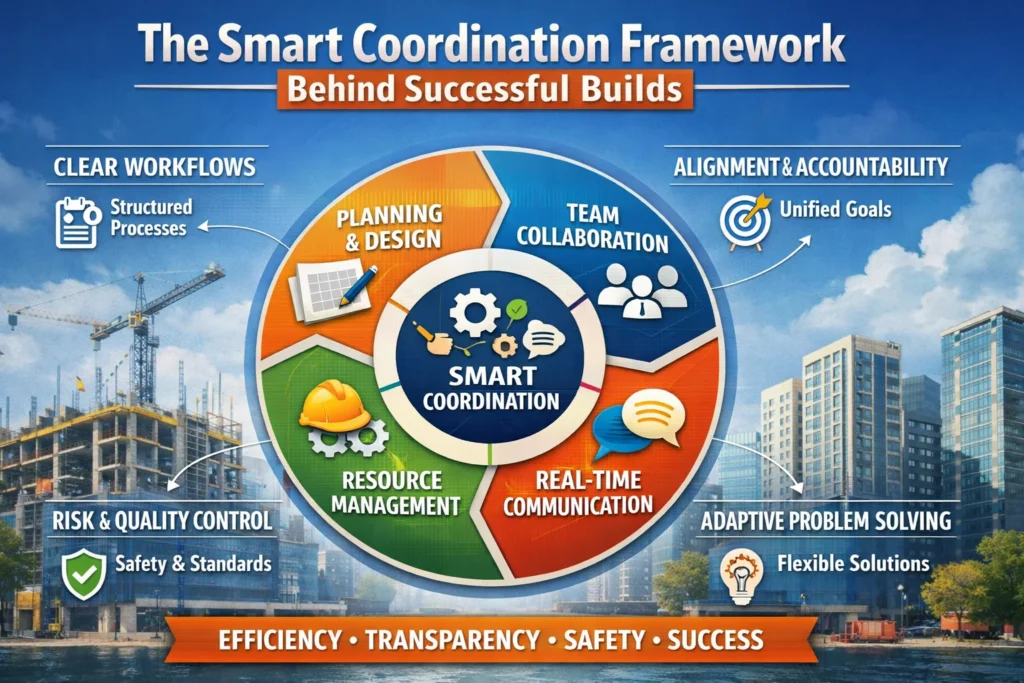
A smart coordination framework is the backbone of successful production tasks. It brings collectively planning, conversation, generation, and collaboration into a cohesive device that ensures performance and precision.
In an industry where each detail matters, the ability to coordinate effectively can determine the distinction between fulfillment and failure. By embracing modern gear and proactive strategies, production groups can overcome demanding situations, lessen risks, and deliver brilliant results.
As construction keeps adapting, the importance of coordination will most effectively increase. Those who spend money on smarter frameworks and continuous development can be better positioned to deal with complicated projects and reap long-term achievement.
FAQs
1. What is a coordination framework in construction?
It is a base machine that aligns teams, processes, and records to make certain clean task execution.
2. Why is communication vital in construction projects?
Effective communication enables you to save errors, improve efficiency, and ensure that everyone’s groups are aligned.
3. How does digital equipment enhance coordination?
They offer real-time records, enhance collaboration, and streamline workflows, making initiatives more efficient.
4. What are the advantages of making plans with the correct values?
It helps hold budgets, allocate resources successfully, and avoid financial issues.
5. How can construction groups enhance coordination?
By adopting contemporary gear, fostering collaboration, and constantly refining their tactics.